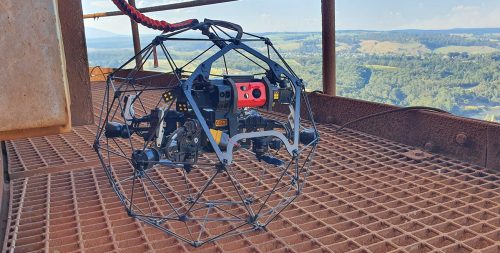
AUAV has spent years evaluating best-in-class robotics for hazardous and GPS-denied environments. The ScoutDI tethered drone system has become one of our primary platforms due to its unlimited flight time, LiDAR-based SLAM navigation, real-time 3D mapping, and class-accredited inspection capability.
When combined with AUAV’s experienced inspection engineers and the underwater/ballast-tank robotic systems of our partner Geo Oceans, we deliver high-confidence inspection data while eliminating the need for confined-space entry or rope access. This approach reduces risk, increases efficiency, and provides asset owners with a fully auditable digital record from every mission.
The ScoutDI drone specialises in fully digitalised inspections of industrial confined spaces including vessel cargo tanks, silos, storage tanks, tunnels, coal fired boilers and more. Their solutions remove the need for human entry into hazardous environments, dramatically improving safety and efficiency.
Proven On-Field Experience – The World-First Class-Accredited Project
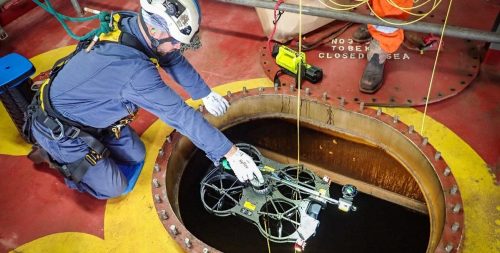
AUAV recently completed the world’s first ABS class-accredited Cargo Oil Tank inspection using the ScoutDI platform on a Shell offshore facility in the Gulf of Mexico.
Project Snapshot at a Glance –
- Duration – Multi-day offshore inspection campaign
- Human entry – None; full inspection performed via drone and robotic submersibles
- Data captured – 3D SLAM point cloud, HD video, UTM wall-thickness measurements
- Outcome – Accepted by ABS; all inspection objectives achieved
- Risk reduction – No rope access, no heights, no confined-space teams
- Operational savings – Reduced bed space requirements and shorter shutdown windows
This project demonstrates AUAV’s hands-on experience delivering complex inspections under demanding conditions.
AUAV is proud to work closely with Scout and successfully completed the world-first class accredited cargo oil tank inspection (with ABS) on Shell facility in the Gulf of Mexico. This was done with zero cargo tank entry, steel thickness testing mounted on the drone and additional thickness measurements from the ballast tanks by sister company Geo Oceans via their custom built remotely operated submersibles.
Scout 137 Drone System includes the following attributes –
- A tethered drone designed for GPS-denied, confined environments delivering continuous power, reliable control, and high-speed data connectivity.
- Equipped with LiDAR, it enables precise SLAM-based navigation, obstacle avoidance, and real-time mapping.
- Features a 3.5× optical zoom camera with autofocus and supports optional payloads like UTM (Ultrasonic Thickness Measurement) and gas sensors for multi-modal inspection.
- The integrated ultrasonic thickness testing sensor enables the assessment of material wall loss. Unlimited flight time removes interruption from battery swaps, enhancing operational flow and is only limited by operator fatigue and video file size. At AUAV we have completed an inspection of over 2.5 hours with a single flight.
AUAV Credentials, Approvals & Industry Partnerships
- AUAV operates to internationally recognised safety and operational standards.
- Our team includes qualified Inspection Engineers, offshore robotics specialists and certified pilots with extensive hazardous-area experience.
Industry Credentials & Compliance
- CASA-certified drone operator
- ABS class-accredited inspection experience
- ISO-aligned safety and quality systems
- Offshore safety, confined-space and hazard-management certified personnel
Technology & Industry Partnerships
- ScoutDI: Confined-space drone world leader
- Geo Oceans: Marine robotics and subsea inspection partner
- Long-term service for Oil & Gas, Maritime, Ports, Utilities and Renewables operators
These credentials help asset owners and classification bodies trust the accuracy and consistency of AUAV deliverables. The inclusion of a cloud-based 3D inspection management tool, hosted on Microsoft Azure with secure access, enables inspectors to review the footage post flight.
AUAV has been developing additional low latency live-streaming inspections, allowing remote experts and stakeholders to participate in or observe inspections in real time. The significant benefits here include reducing the need for bed space on offshore inspections, further reducing the cost of inspections.
By automatically generating location-tagged 3D point clouds, using SLAM to map inspection sites we annotate points of interest (POIs). The reporting platform supports review, annotation, reporting, and even machine learning–based anomaly detection (e.g., corrosion), plus seamless integration with existing asset management or digital twin via API.
The new Scout 3 platform has also incorporated a surface cleaning tool and AUAV, as part of the Scout beta program, is the first commercial operation to be deploying and testing this system in a real-world offshore environment.
ScoutDI is revolutionising how confined-space industrial inspections are conducted—enabling safer, more efficient, and data-rich operations through their tethered Scout 137 drone system and cloud-based Scout Portal.
The key benefits of using the Scout system are the removal of people from confined spaces and, in the case of cargo tanks, all rope access and working from heights.
Additional Confined-Space Use Cases
Beyond cargo oil tanks, the ScoutDI system is deployed by AUAV across a broad range of industrial assets, including –
- Silos & bulk storage – corrosion, deformation and lining assessments
- Power-station boilers – refractory condition checks
- Process vessels – internal weld, seam and nozzle inspections
- Tunnels & culverts – 3D geometry mapping
- Storage tanks – API 653 compliance support
Each mission produces a location-tagged 3D dataset, enabling improved asset lifecycle tracking and long-term defect monitoring.
Book a Confined-Space Inspection or Request a Sample Report
If you’d like to schedule an inspection, request pricing, or review a sample ScoutDI inspection report, our team is here to assist.
Book an Inspection Consultation | Request a Sample Drone Inspection Report | Speak With a Lead Inspection Engineer
Contact: contact@auav.com.au
If you would like more information on our services in confined space inspections in Australia, the UK, Europe, the US, and West Africa, feel free to speak with our experts!
You may find more information about the Scout at https://www.scoutdi.com/
FAQs
1. What is a class-accredited drone inspection?
A class-accredited inspection is approved by classification societies such as ABS, DNV or Lloyd’s Register. It confirms that drone-captured data meets the technical standard required for regulatory inspection tasks, allowing it to replace or supplement manual tank entry inspections.
2. How does the ScoutDI drone navigate without GPS?
ScoutDI uses LiDAR-based SLAM navigation. This provides stable positioning, obstacle avoidance and real-time 3D mapping in fully enclosed environments, delivering accurate location-tagged visual and thickness-measurement data.
3. Can drone-based UTM replace manual thickness readings?
Yes. When operated under approved procedures, ScoutDI’s ultrasonic thickness measurement payload can provide readings acceptable to classification bodies, significantly reducing the need for rope-access teams or manual gauges.
4. What confined spaces can AUAV inspect?
AUAV inspects cargo tanks, FPSOs, silos, boilers, process vessels, void spaces, tunnels, and storage tanks. The platform is designed for hazardous, GPS-denied areas where human access poses increased safety risk.
5. How do drone inspections reduce cost and increase safety?
Drone inspections eliminate confined-space entry, scaffolding, rope access and large shutdown crews. This lowers risk exposure, minimises bed-space requirements offshore, and shortens maintenance windows – especially for high-risk environments.
6. Can clients view the inspection remotely in real time?
Yes. AUAV provides low-latency live streaming so engineers, classification surveyors and remote specialists can participate or observe inspections without being physically onsite.